

WILKES-BARRE – Fans see the goals, the saves, and the celebrations on the ice. However, beyond the glass and above the arena floor, another team works just as profoundly to ensure a successful presentation of the game. If the bench is where the action happens, the broadcast booth is where the story is told.
With my time at the Wilkes-Barre/Scranton Penguins game against the Cleveland Monsters, I was able to experience firsthand exactly how much time and effort goes into the broadcasting side of game day.
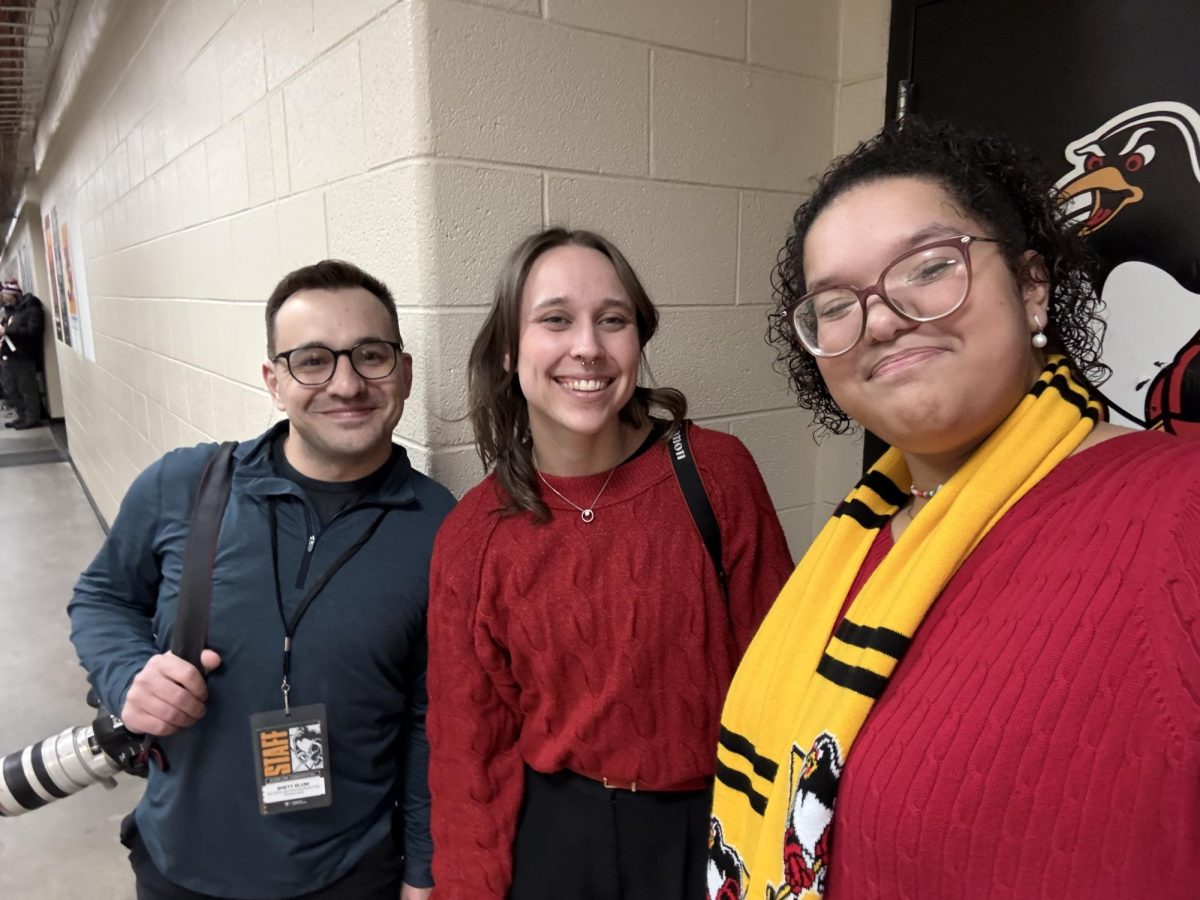
Before the game began, I was taken behind-the-scenes with Senior Vice President of Business Operations, Brian Coe, to tour the broadcast booth along with the arena’s graphic control room. From inside the control room and broadcast booth, I observed how producers, announcers, and technicians worked in harmony to deliver live game feed and updates to both fans in attendance and those listening in from home.
From warm-ups through the first period, I remained upstairs inside the control booth, experiencing the game from a point-of-view far from the stands. While watching the game from this vantage point, I realized how much communication and preparation go into in-game graphics and real-time game broadcasting.

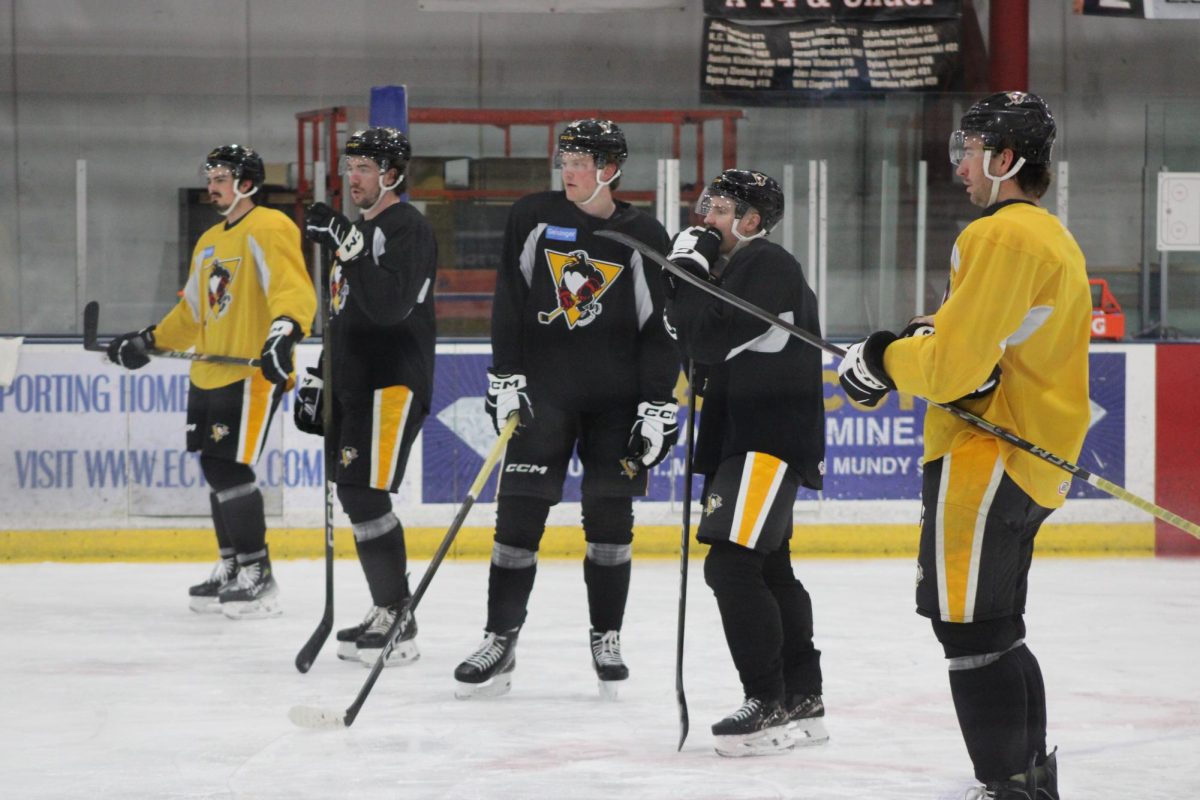
With one minute and two seconds left in the first period, Ville Koivunen scored on Zach Sawchenko to bring a 2-1 game up to a tied 2-2 game. At the start of intermission, I switched roles for the night, moving from the control booth down to the broadcast table alongside the Penguins’ Director of Communications & Broadcaster, Nick Hart.
Before the start of the second period, I was given a headset and quickly briefed on how everything would run once the broadcast returned live. What started as learning from above had officially become learning hands-on. From that moment forward, I was now a part of the broadcast.
Not only was I a part of the broadcast, but I was also live on the air, announcing goal scorers for both the Wilkes-Barre/Scranton Penguins and the Cleveland Monsters. In that moment, I wasn’t just watching the game; I was helping deliver it to those watching from afar. The transition from observing to actively relaying information gave me a greater understanding and appreciation for the preparation that occurs long before the fans tune in.
By the end of the second period, the only scorer for the time being was Mikael Pyythiä of the Cleveland Monsters, assisted by Brendan Gaunce against Wilkes-Barre/Scranton goaltender Sergei Murashov. The pace for the third period wasn’t much faster; however, Emil Pieniniemi was able to tuck one into the net within 43 seconds of the third. This goal, assisted by Finn Harding and Ville Koivunen, tied the game 3-3 and brought the game into overtime.
It didn’t take long for Cleveland’s very own Brendan Gaunce to shoot the game-winning overtime goal against Sergei Murashov to bring the score to 4-3 and result in a back-to-back loss for Wilkes-Barre/Scranton. The Penguins have played enough games to maintain their 2nd place standing in both the Atlantic Division and Eastern Conference, as well as their third place standing in the league, for now.
After the game had concluded, I had a chance to sit down and talk with Brian Coe about his responsibilities as Senior Vice President of Business Operations and what it’s like for him during gamedays.
Having just traveled to the AHL All-Stars, what were your roles and tasks while in attendance?
“I was in attendance at the Board of Governors meeting. This is a meeting that goes on four times a year where all of the heads of all of the business sides and hockey sides of all the teams get together to discuss changes to rules, to review how the league is running or if there are any problems, talk about things like scheduling for next year, scheduling the playoffs, talk about new ways to enhance business, so that’s a big meeting that I go to while I am there. Then, I am also on a committee called the Team Business Services Committee, as well, which is not so much the hockey side of things, but it’s more of a business side. We get together, and we talk about opportunities that other teams have in the league. We were talking about things like what are some successful theme nights, or what are some fun things that teams are doing to try to bring more fans in. We talk about things like midweek games versus weekend games, what the differences are there, and how to market those differently. We talk about upcoming opportunities to get together and share best practices around the league. So, those were the two pieces of work that I was doing while I was there. And then the rest of the time has kind of been a chance to meet your peers from around the league in a more social kind of way, instead of being all businesslike and work. You get to hang out with them at the game, have different kinds of conversations about the business at that time, too, maybe more one-on-one instead of in a big group. So that was about my time at the All-Star games.”
What does a typical Wilkes-Barre/Scranton Penguins game day look like for you, starting from when you enter the arena?
“So let’s start even before we enter the arena. If we’ve got a game on a Wednesday, Friday, Saturday, we’re in the office generally starting at 9 o’clock in the morning, if not a little bit earlier, and we’re getting a lot of work done there too, actually. Our ticket staff is in there selling tickets, our creative people are in there getting their stuff ready for the video boards and for the music and everything. I kind of oversee a lot of the marketing and the business side of things there, so I am working with all of the different departments. We have ticketing, corporate sales, creative team, and we’ve got our merchandise [team]. We also run the Toyota Sportsplex, so I kind of oversee the people who are in charge of all those things. So, you know, it’s meetings to talk about upcoming events or upcoming games, it’s phone calls a lot. I have a weekly phone call with Pittsburgh, where I have to kind of tell them what’s going on in the business side. I’m putting together reports, we’re tracking ticket sales, I’m working on a video, or sometimes I write a story for the game program and help out there. But most of the time I’m just there to kind of see what everybody else is doing and make sure that they don’t need any help, or if they do need help, I’m there to give it to them.”
What advice would you give to young aspiring individuals, or students like myself, who want to one day break into the sports media industry?
“Don’t be afraid to jump in and try it. If you’ve got a passion for it, you know, search out somebody who can be a mentor or can help you get your foot in the door. I get a lot of messages from students, either high school or colleges saying, ‘Hey, it’s my dream to work for a team, how do I do that?’ or you know, ‘What advice do you have for me?’ I’m always happy to talk to them, so reach out to people. LinkedIn is a great place to find people who are in the sports business, to just send them a message saying ‘Hey, I’m interested in working in a creative department for a hockey team/basketball team/baseball team, etc.,’ see if they have ten minutes that you can pick their brain and find out more about what they’re doing. Get as much experience as you can. Internships are great. That’s how I got started. That’s how 99% of people in this business get started. Once you are able to get an internship, get one. That gives you a look behind the scenes about how things actually run and operate. You also make great connections by doing that. My first internship was with Pittsburgh. The gentleman who hired me there brought me out here to this team, and he’s been a great mentor to me for 30 years.
And then just, you know, it’s a lot of hard work. People see the glamour side of things from the outside, but you have to realize that when you’re behind the scenes, there’s a lot of grinding, a lot of hours in the office. Yesterday, I got to the office at ten in the morning and got home at 11 o’clock at night. I was back at the rink at 7 o’clock in the morning, and I won’t get home until 8 o’clock tonight. And then we’re right back at it tomorrow, because we have to get ready for next Saturday. So it’s a lot of hard work. It’s a lot of grinding, but if it’s something you love, if sports is something you love, you’re never going to feel bad about it because you can sit here and watch hockey games, you get to be involved with that process to see what’s going on there. I find that people are either in sports for a very short amount of time or a very long amount of time. But if you love it, you know, you’re in it for life, so it’s really fun. You meet a lot of great people, and you get to travel places and see different things. So yeah, I think it’s the best.”
Within my entire experience shadowing Brian Coe, Allie Debe, and Nick Hart, this offered insight into a side of game day that fans rarely get to see. What happens beyond the ice may go unnoticed by many, but it plays a vital role in shaping how the story of the night unfolds. Without the players, broadcasters, social media directors, business managers, sales managers, and other people who contribute to making game days possible, we wouldn’t even be able to talk about sports to this day.
Experiencing the broadcasting side firsthand not only deepened my appreciation for the work behind the scenes but also further strengthened my desire to pursue a future in sports media. I am sincerely thankful to have been allowed to learn new things and experience the behind-the-scenes work of everyone within the Wilkes-Barre/Scranton Penguins organization.
That’s a wrap for now! Until next time, Let’s Go Pens!